Where Research and Practice Meet: An Investment-Oriented, Nature-Based Example of Why Knowledge Exchange Matters
While fundamental research creates new knowledge and provides fertile ground for innovation, its value extends beyond academia when insights are made accessible to practitioners. Events such as the SFI–SSF Conference enable such access and two-way dialogue, reflecting SFI's mission to grow knowledge capital for the long-term prosperity of Switzerland and its financial center.
Informing Practice through Academic Insights, and Vice Versa
SFI Prof. Sautner is Professor of Sustainable Finance at the University of Zurich and holds an SFI Senior Chair. He is one of the world's leading researchers in sustainable finance. His research on climate change, biodiversity, ESG investing, and financial markets has significantly advanced our understanding of how environmental risks influence investment decisions and corporate behavior.
Against a backdrop of biodiversity declining at an unprecedented speed, SFI Prof. Sautner asked, "Are nature-related risks financially material to businesses, and why?" His answer to the first part of that question was, in short, that yes they are. As to the why, that is clearly more complex. As an example, he cited the potential impact of coral reef erosion on a Europe-based travel group that takes tourists scuba diving off Egypt's Red Sea coast. The disappearance of coral reefs in the area results in fewer tourists wanting to visit—a downturn in demand that could leave the travel group's hotels as stranded assets.
Diving deeper into this and other examples, audience members at the conference used the Q&A session to discuss what challenges investors face in incorporating nature risks into lending decisions, or how research data translates into actual financial risks such as probability of default or investment volatility.
SFI Prof. Sautner also talked about the future direction of his ground-breaking research, including how to measure local biodiversity impacts of renewable energy plants around the world. As he set out, this research is pertinent to the renewable energy conversation as projects such as solar, wind, and hydro plants can, in some cases, have negative effects on nature by destroying habitats and fragmenting ecosystems.
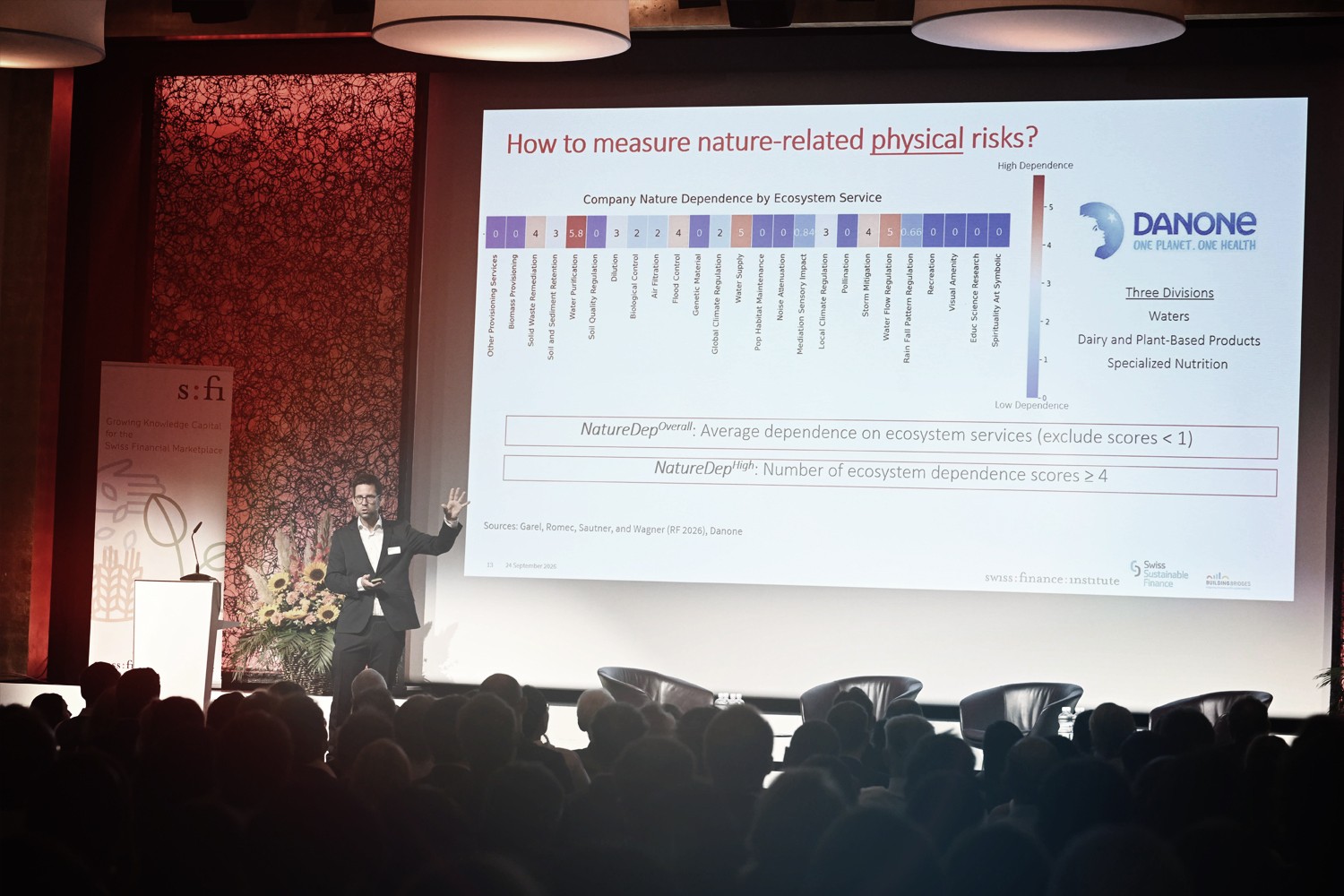
Intense audience interest continued not only into a thought-provoking dialogue during the panel discussion but also in more informal interactions during the conference breaks. Attendees seized the opportunity to put questions to SFI Prof. Sautner, and he relished the chance to gain new perspectives from conference participants.
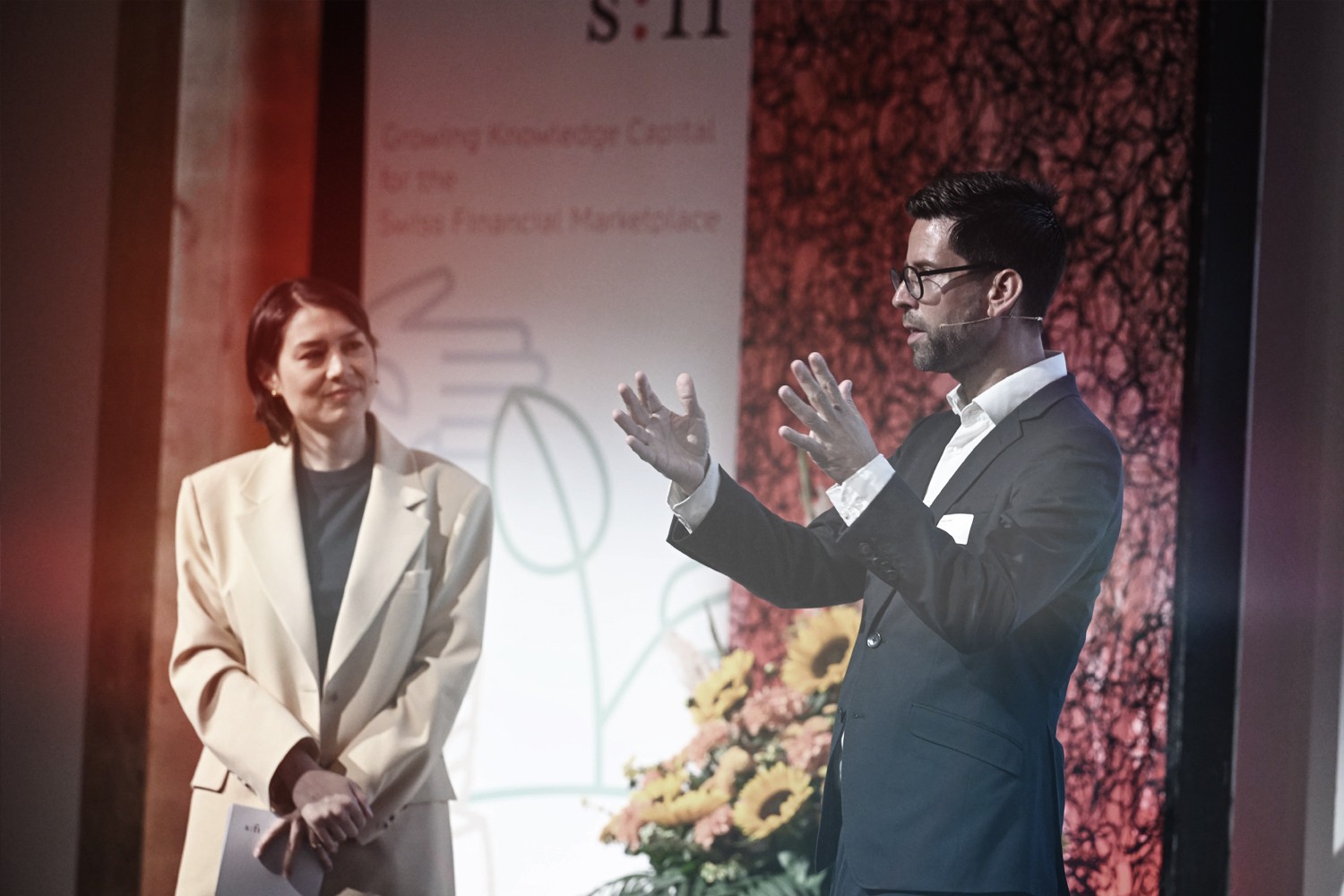
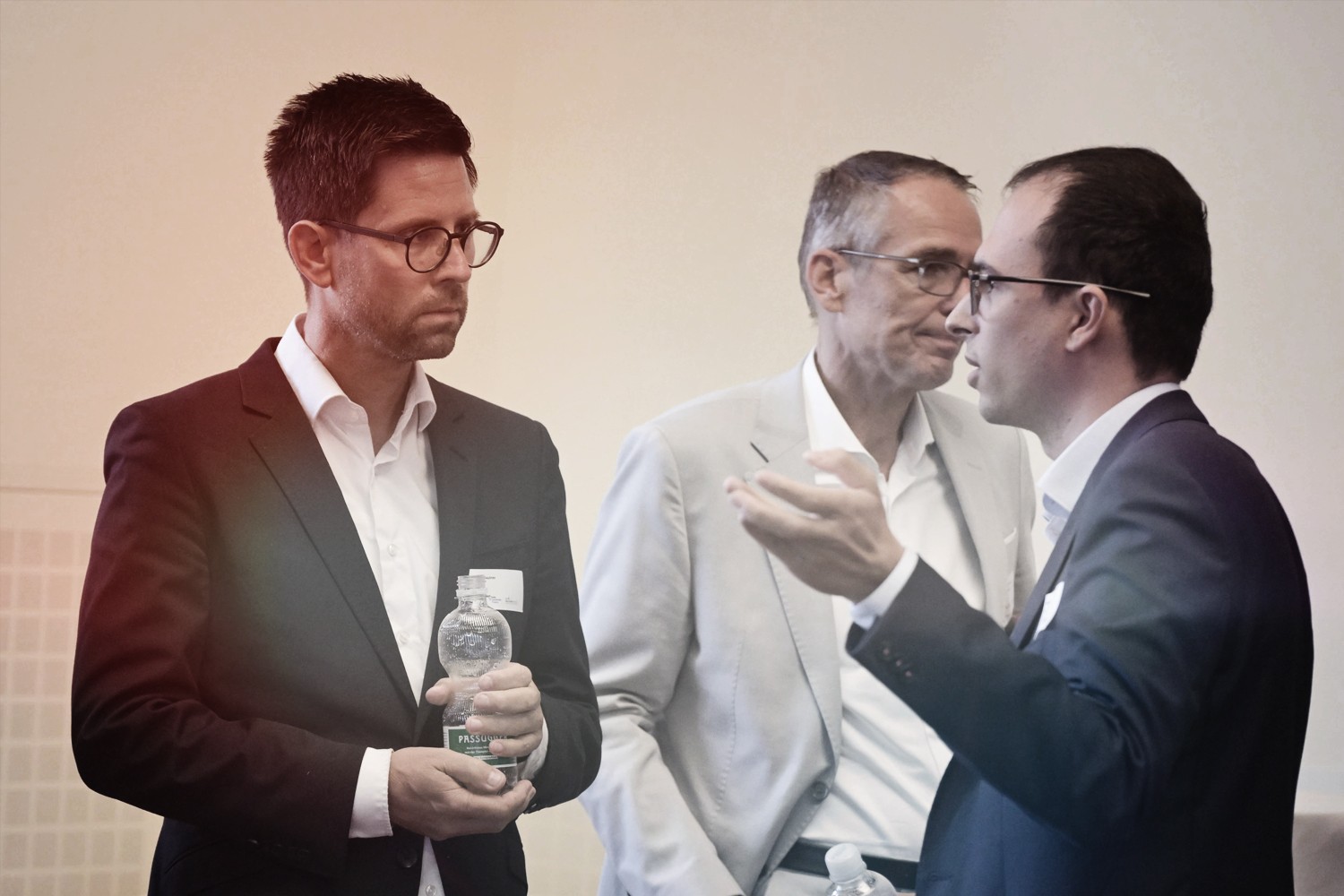
This is at the core of SFI's mission: nurturing the knowledge capital that helps the Swiss financial sector position itself as a leading competence center in the global financial industry. As SFI Prof. Sautner said, "It is always great to have an opportunity to explain why your research matters". And that is what he did to a highly engaged audience, while also setting out why the flow of information in the opposite direction is just as important. Such exchanges prompt fresh thinking and connect research and financial decision-making more closely. The benefits are evident, naturally.
Further Reading:
- Corporate Nature Risk Perceptions, Review of Finance 30, 2026, 11-42 (with S. Gjerde, A. Wagner, and A. Wegerich)
- Firm-Level Nature Dependence, Review of Finance 30, 2026, 231-273 (with A. Garel, A. Romec, A. Wagner)
- Biodiversity Impacts of Renewable Energy (with H. Gong, C. Lin, and T. Schmid)